Skip to content

Navigating the AI Search Engine Wars: How SERP APIs Keep You Ahead of the Curve

This article explores the current state of the AI search engine wars, the major players involved, and how SERP APIs like Traject Data’s SERPWow can help you stay on top of the game.

The AI Search Engine Wars: What’s Happening?

The “AI search engine wars” refer to the growing competition among tech giants like Google, Microsoft, and Meta—alongside AI pioneers like OpenAI—to develop the most advanced AI-powered search engines. When ChatGPT was released in 2022, many began questioning whether AI could eventually replace traditional search engines. Google’s quick restructuring and aggressive development of AI initiatives show it’s not taking ChatGPT lightly. Other players, both old and new, are also entering the fray, aiming to redefine the search landscape.

 A Timeline of the AI Search Engine Wars

The AI search engine landscape has rapidly evolved, with major tech companies introducing AI-driven features to enhance user experience. Here’s a timeline:

  • November 2022: OpenAI releases ChatGPT, a conversational AI model that brings generative AI to the mainstream. Within five days, it had more than a million users. Users begin turning to ChatGPT for information previously found on Google search. 
  • January 2023: Microsoft invested another $10 billion in OpenAI, bringing its total investment to $13 billion, laying the groundwork for future AI integrations.
  • February 2023: Microsoft integrates OpenAI’s GPT-4 model into Bing, enhancing search functionalities with AI capabilities.
  • March 2023: Google unveiled Bard, its AI chatbot, an open-access tool to rival OpenAI’s ChatGPT, later rebranding the technology as Gemini.
  • December 2023: Google releases Gemini, its latest AI model, claiming to surpass previous state-of-the-art models on most benchmarks.
  • May 2024: Google introduced its Search Generative Experience (SGE) now referred to as AI Overviews at the top of search results, aiming to provide AI-generated summaries to user queries.
  • July 2024: OpenAI launched SearchGPT in phases, starting with a limited release to 10,000 test users on July 25, 2024.
  • October 2024: Meta is pursuing its own AI search engine to put inside its Meta AI tool to replace operations inside Meta that are currently using Google search or Bing.
  • December 2024: OpenAI announces that ChatGPT’s AI search engine is rolling out to all users, both free and paid, expanding access to AI-driven search capabilities.

How AI is Changing Search Engine Optimization (SEO)

These developments underscore the rapid advancements in AI integration within search engines, as companies strive to enhance user experience and redefine search paradigms.

AI is not just changing how search engines function—it’s rewriting the rules of SEO. If AI-powered overviews and chat-style results feel ubiquitous, that’s because they’re reshaping user behavior and, by extension, SEO strategies. AI is transforming search by prioritizing intent and context over traditional keyword-based indexing. Features like conversational queries, personalized results, and AI-generated summaries are becoming the new standard.

Key trends in AI-driven SEO include:

  • Shift to Context and Intent: AI-powered search engines prioritize the user’s intent and context, moving away from a purely keyword-centric approach.
  • Importance of Structured Data: Schema markup and structured data have become essential to helping AI systems understand and surface content effectively.
  • Frequent Algorithm Updates: With AI driving rapid updates, staying current with algorithm changes has become more challenging than ever.

For marketers, this means adapting strategies to align with the evolving landscape, making tools like SERP APIs indispensable.

The Role of SERP APIs in the AI Search Landscape

A SERP API (Search Engine Results Page API) is a tool that provides programmatic access to real-time search engine data. It’s like having a backstage pass to search engine performance, offering invaluable insights for marketers.

Key Benefits of SERP APIs:

  1. Real-Time Data: Access up-to-the-minute ranking data across multiple search engines, including Google, Bing, and Amazon.
  2. Competitive Analysis: Monitor competitors’ rankings and identify trends.
  3. Dynamic Adjustments: Quickly adapt SEO strategies based on algorithm updates and emerging AI-driven features.
  4. Brand management: Track online mentions of your brand and monitor online reviews.  

By leveraging SERP APIs, marketers can stay proactive, ensuring their strategies align with the latest search engine advancements.

Practical Tips for Leveraging SERP APIs

To get the most out of SERP APIs in the AI search era, consider these actionable tips:

  • Monitor Rankings Regularly: Set up automated monitoring to track ranking changes on both traditional and AI-powered search engines.
  • Analyze AI Features: Pay attention to AI-specific elements like rich snippets and conversational search results to identify optimization opportunities.
  • Optimize for Context: Use insights from SERP APIs to fine-tune your content for both intent-based and traditional ranking factors.

How Traject Data’s SERPWow API Can Help

The AI search engine wars are transforming how we think about search and SEO. Staying agile in this rapidly evolving landscape requires the right tools, and SERP APIs like Traject Data’s SERPWow are essential for maintaining a competitive edge.

Ready to future-proof your SEO strategies? Start leveraging Traject Data’s SERPWow API to stay ahead in the AI search engine wars.

Ready to See What Traject Data Can Help You Do?


We’re your premier partner in web scraping for SERP data. Get started with one of our APIs for free and see the data possibilities that you can start to collect.

Bing Search Market Share is Growing: Why It Matters and How to Rank Higher with APIs

You’ve worked hard at your Google SEO, and you finally made it to the top. Mission accomplished. A job well done. But then someone on your team mentions they couldn’t find your company in a search. That can’t be right—you see your company right at the top of the page. Then you think to ask, what search engine are you using? It turns out, they’re using Bing.

This article will cover Bing SEO tips and the SERP APIs you’ll need to capture this lucrative market.

What is Bing and Who Are Its Users?

The Google search engine dominates the market to the point that “I’m going to google that” is synonymous with online search. But it’s not the only search engine on the market. Bing is Microsoft’s search engine and Google’s biggest competitor. For many Microsoft users, they may not even realize they are using Bing because it’s so tightly integrated with other Microsoft products. Bing is the default search engine of the Microsoft Edge browser and is embedded within Microsoft 365 products. If you’re in a Microsoft environment, it’s hard not to use Bing.

Bing’s reach extends beyond Microsoft. Microsoft’s Cortana, Xbox and Amazon’s Alexa leverage Bing’s search engine. Ever asked Alexa a question? Turns out you’re a Bing user.

When comparing Bing users to typical Google search users, Bing users tend to be slightly older (average age 45), better educated, more affluent, and more likely to be married with children at home—making them a highly desirable market.

The current AI Search Wars put additional emphasis on the need to pay attention to Bing. The rise of AI-powered search engines is drastically changing how search engines work. Microsoft has partnered with OpenAI to leverage ChatGPT in its Bing browser, while Google is using a home-grown AI solution. The search engine that wins could be the one with the best AI.

Searching for how to optimize Bing SEO

Why Bing’s Growing Market Share Matters

On average, Bing ads outperform Google in several key metrics: 

  • Bing shopping campaigns have a 45% higher ad click-through rate (CTR) than Google.
  • Bing’s average cost per click (CPC) on shopping ads is 30% lower than Google’s.
  • The average cost to acquire a customer (CPA) is about 40% lower through Bing shopping than on Google shopping.

How Does Bing’s Search Engine Differ from Google?

Like me, maybe you thought ranking high on Google would automatically put you at the top of other search engines, but unfortunately, that’s not the case. In many instances, Bing’s ranking criteria are clearer than Google’s, making it easier to achieve high rankings if you follow their guidelines. Let’s break down the similarities and differences:

SEO ranking criteria shared by both Bing and Google:

  • Publish great content that’s relevant and useful to your audience.
  • Include videos and images—they help keep users engaged.
  • Use schema markup to give search engines more context about your pages.
  • Write compelling meta tags and descriptions
  • Focus on earning high-quality backlinks from reputable sites.

Areas where Bing SEO differs from Google:

  • Domain Age and Authority: Bing gives older domains more credit compared to Google.
  • Desktop vs. Mobile: While Google prioritizes mobile-friendly sites, Bing leans more toward desktop users—but still values mobile-friendly ones.
  • Social Signals: Bing pays attention to social media activity. So, an active social presence can help your ranking.
  • Exact Match Keywords: Bing prefers when your keywords match exactly—so keep it specific.
  • Keyword Stuffing Tolerance: Bing might cut you a little more slack with keyword stuffing, but don’t overdo it. Both search engines frown on this practice.

Tools to Improve Your Bing SEO

To master Bing SEO, you’ll need the right tools. Here are the essentials for your toolkit:

  1. Bing Webmaster Tools: Microsoft’s free platform provides reporting, diagnostics, and notifications to improve your site’s performance in Bing search. It also includes a keyword research tool.
  2. Sitemap Submission Tools: Submitting a sitemap through Bing Webmaster Tools ensures Bing can efficiently crawl and index your website pages.
  3. SERP APIs: Search engine algorithms are constantly changing. A SERP API allows you to monitor your rankings and those of your competitors, giving you the data you need to adapt your strategy.

Leverage Traject Data’s SerpWow to Rank Higher on Bing

SEO for Bing is similar to Google, and both require consistent data and monitoring. To maximize your reach, you need a SERP API that can track and monitor both search engines. Don’t miss out on 16% of the US desktop search market when you can leverage a SERP API to help you climb the ranks on both platforms.

Traject Data’s SerpWow API does just that. It monitors Google, Bing, Yahoo, Baidu, Yandex, Naver, Amazon, and eBay, giving you comprehensive insights to optimize your SEO strategy across multiple search engines.

Start climbing the ranks with Traject Data’s SerpWow today.

Ready to See What Traject Data Can Help You Do?


We’re your premier partner in web scraping for SERP data. Get started with one of our APIs for free and see the data possibilities that you can start to collect.

How to Use an Amazon Scraper API to Boost Your Search Rankings

As of August 2024, there are over 9.7 million third-party sellers on Amazon, and the number keeps growing each year. A typical Amazon search returns dozens of pages of results, but most users rarely go beyond the first few pages. In fact, the majority of clicks happen on the first page. Here are some key statistics: 

  • 70% of Amazon customers never click past the first page of search results.
  • 35% of Amazon shoppers click on the first product featured on a search page.
  • 64% of clicks go to the first three items displayed in search results.
  • 81% of clicks go to brands on the first page of search results.

With competition on Amazon heating up, the need for search ranking optimization is more important than ever. In this article, we’ll share some tips and how to leverage an Amazon data scraper API to improve your Amazon search engine results ranking.

How Does Amazon SEO Work?

Amazon’s product ranking algorithm, known as “A10” (which replaced the A9 algorithm in 2021), determines a product’s position in search results. Amazon updates the algorithm frequently, though it doesn’t disclose how often these updates occur. Rankings also fluctuate based on customer behavior. For example, as more buyers purchase an item, its ranking improves. During holiday seasons or specific events like the Super Bowl, product listings with relevant keywords for those occasions will rank higher. Sellers should expect their product rankings to change throughout the day, week, month, and year.

Key factors that influence Amazon’s ranking algorithm include:

  • Relevance: How well the product listing matches a customer’s search query, including optimized keywords.
  • Sales history: Products with strong sales performance rank higher.
  • Amazon Best Sellers Rank (BSR): a metric that calculates a product’s sales rank compared to similar products on Amazon. Products with a higher rank, will get a boost in search results. 
  • Customer reviews: Quantity, quality, and recency of reviews matter.
  • Pricing: Competitive pricing is crucial, but the lowest price doesn’t guarantee the top spot.
  • Prime eligibility: Prime products are favored.
  • Geographic location: Rankings may vary depending on where the customer is located.

How to Improve Your Amazon Search Results

Obsessing over Amazon SEO is a must for every seller aiming for success. Here are some tips to climb the rankings:

  • Optimize your product listing: Use engaging descriptions, effective tagging, and include relevant keywords in your title and description. Think like your customers—what would they search for?
  • Promote your listing: Run sales events, offer coupons, or use Amazon Ads to drive traffic and boost sales. Higher sales leads to higher rankings, which leads to higher sales.
  • Use high-quality images: Clear, well-lit, professional images that showcase your product from multiple angles make a big difference.
  • Earn customer reviews: Encourage buyers to leave reviews. Recent reviews carry more weight in the ranking algorithm.
  • Become a Prime seller: Enroll in Amazon’s Fulfillment by Amazon (FBA) program to improve your chances of ranking higher.

Leverage an Amazon Scraper API to Improve Your Amazon SEO

Top Amazon sellers often rely on an Amazon scraper API to gather the data they need to stay competitive. Since rankings can change several times a day, manual monitoring just isn’t practical.

Here’s how you can use a scraper API to boost your SEO:

  1. Monitor your rank: Track your page ranking and keep tabs on your competitors.
  2. Analyze keyword usage: Identify high-performing keywords used by competitors and strategically incorporate them into your product titles, descriptions, and backend keywords.
  3. Price optimization: Use data to adjust your pricing competitively while considering market demand and value proposition.
  4. Review analysis: Monitor your own product reviews to protect your reputation and scrape competitor reviews to identify pain points and areas for improvement in your product or listings.

The Bottom Line for Amazon SEO

Mastering Amazon search rankings isn’t just about understanding the A10 algorithm—it’s about leveraging every available tool to optimize your listings, pricing, reviews, and keywords. With millions of sellers competing for clicks, staying ahead requires more than effort; it demands data-driven insights collected through an industry-leading Amazon API.

That’s where Traject Data’s Rainforest API comes in. With real-time monitoring of your rankings, competitor data analysis, review tracking, and keyword discovery, Rainforest API empowers you to make smart, strategic decisions that drive results.

Forget manual monitoring and guesswork—let automation and precision take your Amazon SEO strategy to the next level.

Ready to elevate your Amazon game? Try Traject Data’s Rainforest API today and unlock actionable insights to dominate the search results. Get started now!

Ready to See What Traject Data Can Help You Do?


We’re your premier partner in web scraping for eCommerce data. Get started with one of our APIs for free and see the data possibilities that you can start to collect.
Maximize Your Amazon Sales with Amazon Scraper APIs: A Complete Guide

Amazon is the uncontested leader in e-commerce, serving as the starting point for 56% of online shoppers. What many don’t realize is that the majority of products sold on Amazon come from independent sellers. However, not all sellers experience equal success. Only 19% of Amazon small business sellers achieve average monthly sales exceeding $10,000.

What sets top-performing sellers apart? The answer lies in data—lots of it. This blog introduces how Amazon scraping can drive strategic business outcomes in today’s competitive e-commerce landscape.

How Amazon Scraping Can Improve Your Business

Leading Amazon resellers leverage web scraping tools to gain insights into pricing, product trends, and market opportunities. Scraping publicly available data—such as product titles, descriptions, prices, and reviews—is legal, provided it complies with Amazon’s terms of service.

Regularly monitoring Amazon’s marketplace offers several key benefits:

  • Search Ranking Monitoring: Optimize product listings and monitor search rankings over time to stay visible as Amazon continuously updates its search algorithms.
  • Reviews Monitoring: Protect your brand by analyzing customer feedback for your products. Monitor the feedback for competitor products to identify opportunities to enhance your offerings.
  • Competitor Pricing: Track competitor prices to inform your own pricing strategies.
  • Product Comparison Data: Compare similar products across sellers to refine your market positioning.
  • Strategic Insights: Discover underserved customer needs and new market opportunities to guide business strategy.

How to Start Amazon Web Scraping

Amazon data scraping began as a manual task—copying and pasting data into spreadsheets. Over time, tools like Python scripts streamlined the process, allowing for automated data collection. However, maintaining a custom script comes with challenges:

  • Constant Maintenance: Amazon has over 40,000 software engineers, releasing software updates multiple times a day. This requires constant maintenance of scraping scripts.
  • Policy Compliance: Amazon often updates its policies and terms of service. Violators risk being blocked from the site. 
  • Data Parsing: Extracted data often requires additional scripts to clean and organize it for analysis.

Fortunately, third-party Amazon scraping APIs now offer a more efficient and cost-effective solution.

The Benefits of Using Amazon Scraper APIs

Modern Amazon scraper APIs eliminate the complexities of manual scraping or custom-built scripts, offering streamlined data collection tailored to your business needs. The data is delivered organized and ready for analysis. 

Traject Data’s Rainforest API is a leading solution for Amazon data scraping. Key benefits include:

  • Data Parsing: The API delivers clean, structured data, eliminating the need for time-consuming parsing.
  • Customizable Data Delivery: Tailor data collection and delivery to meet your specific business requirements.
  • Scalability and Cost-Effectiveness: Flexible pricing allows you to scale data usage as needed, with free options available for basic usage.
  • Robust Support and Documentation: Comprehensive guides and responsive support ensure seamless integration with your analytics tools.
  • Versatile Data Export: Export data in formats like JSON or CSV, or have it delivered directly to your systems.

Conclusion

Data-driven decisions are the foundation of success in the competitive world of e-commerce. Whether you need to monitor competitors, track search rankings, or analyze customer reviews, Amazon scraper APIs can provide the insights you need to thrive.

Rainforest API simplifies the process, delivering accurate, actionable data at an affordable cost. Start transforming your e-commerce strategy today with tools that empower your business to succeed in the Amazon marketplace.

Ready to See What Traject Data Can Help You Do?


We’re your premier partner in web scraping for eCommerce data. Get started with one of our APIs for free and see the data possibilities that you can start to collect.

Capture Reviews & Ratings Data at a Low Cost with an API

In the past, consumers relied on word of mouth to make purchasing decisions. Today, “digital word-of-mouth” — online reviews and ratings — holds immense influence due to its reach and persistence. In fact, online reviews have become critical in shaping consumer opinions and driving sales.

However, reviews are scattered across multiple platforms, frequently changing, and require active monitoring to capture insights in real time. This guide will explore how using a low-cost API can simplify review data collection, helping your business stay competitive by accessing essential insights at scale.

Why Monitoring Reviews and Ratings Matters for Businesses

To say that reviews matter is an understatement. 93% of consumers read reviews before making a purchase, and 97% say customer reviews influence their buying decisions. Negative reviews, in particular, carry a lot of weight — 94% of consumers say a bad review has convinced them to avoid a business.

Even a small improvement in a business’s ratings can lead to measurable gains. A one-star increase, for example, can result in a 5-9% revenue boost.

There are many applications and benefits to consistently monitoring review data:

  • Preserving Brand Image: Monitoring reviews allows businesses to quickly identify and respond to negative feedback, helping to protect their reputation. Timely responses to reviews show customers that a business is attentive and proactive.
  • Identifying Opportunities: Analyzing reviews helps businesses understand what customers love and what they don’t. By identifying unmet needs in the market, companies can adjust their offerings or develop new products to fill those gaps.
  • Competitive Intelligence: Tracking competitors’ reviews can reveal strengths and weaknesses, offering insights into market expectations and helping refine your competitive strategy.
  • Improving Product Descriptions: Customer feedback can highlight specific features or benefits to emphasize in product descriptions, aligning marketing with customer preferences.
  • Evaluating Performance Across Retailers: For businesses selling on multiple platforms, monitoring review data provides insights into product performance and helps maintain consistent brand messaging across different sites.
  • Adapting to Market Shifts: Regular monitoring enables businesses to identify and respond to market changes or shifts in consumer sentiment, helping to stay relevant and responsive.

Challenges in Collecting Review Data at Scale

In the past, collecting review data often meant manually copying and pasting reviews into spreadsheets — a time-consuming and error-prone process. While scraping tools offered a more automated approach, they required significant maintenance due to frequent website layout and structure changes. Thankfully, technology has advanced, and scalable, cost-effective APIs now make it possible to automate review monitoring in real time at low cost.

However, there are still challenges in collecting review data at scale:

  • Platform Limitations: Some review platforms restrict or limit data scraping. An effective API solution must navigate these restrictions to ensure comprehensive data coverage without violating terms of service.
  • Data Quality and Consistency: Collecting data manually from multiple platforms can introduce inconsistencies, especially when formats vary. APIs that provide structured data help reduce errors and streamline analysis.
  • Managing High Volumes: As the number of reviews grows, managing large datasets becomes increasingly complex. APIs that support bulk data handling make it easier to process and analyze high volumes of data.

How to Choose the Right Review Scraping Tool

Selecting the right API for review monitoring involves evaluating several critical factors:

  1. Omni-Channel Coverage: Look for an API that covers major review sources like Google Maps, Google Shopping, Amazon, Walmart, and Target. Comprehensive coverage ensures you capture a wide range of customer feedback, and the best APIs also offer additional data like pricing and product details.
  2. Real-Time Data Access: Timely access to reviews is essential for businesses that want to respond quickly to customer feedback. Choose APIs that provide near-instantaneous updates, so you’re always aware of the latest customer sentiments. APIs that adapt to changing site structures and rules also help future-proof your review collection efforts.
  3. Data Parsing: Some APIs deliver data in raw formats that require additional parsing, which can slow down analysis. Look for APIs that streamline the parsing process, providing clean, structured data that’s ready for analysis from the start.
  4. Customizable Data Delivery: Many APIs offer options for customizing data delivery, such as adjusting intervals or filtering specific types of reviews. This flexibility can be invaluable for tailoring data collection to specific business needs.
  5. Cost and Scalability: Pricing should be flexible, allowing you to scale up or down based on data volume and usage. Opt for providers that offer tiered pricing, which can adapt to your business growth and budget constraints. Some providers even offer free options for basic usage.
  6. Support and Documentation: A well-documented API with reliable support reduces setup complexity and can help resolve issues faster. Comprehensive guides and active support channels are particularly valuable if you’re integrating the API with other analytics tools.

Conclusion

Collecting and analyzing online review data is essential for businesses to manage online reputation and stay competitive in today’s digital landscape. A cost-effective, scalable API solution enables you to streamline data collection, reduce manual effort, and focus on actionable insights that drive growth. Regularly monitoring reviews helps businesses protect their brand, refine products, and enhance customer service.

Try Traject Data’s APIs to Stay on Top of Your Reviews and Ratings Online

Stay ahead by making data-driven decisions. Traject Data offers affordable, scalable APIs tailored for online review monitoring, empowering you to collect and analyze reviews at scale. Learn More about Traject Data’s Review Monitoring Solutions

Ready to See What Traject Data Can Help You Do?


We’re your premier partner in web scraping for eCommerce and SERP data. Get started with one of our APIs for free and see the data possibilities that you can start to collect.

Maximizing News SEO Visibility on Google with APIs

As of September 2024, Google continues to dominate the search engine market, holding 90% of market share worldwide, making Google Search and Google News the largest drivers of traffic to news sites.

According to the News Media Alliance: “Google Search combined with Google News accounted for the majority (approximately 75%) of referral traffic to top news sites.”

For news publishers, ranking well on Google is essential. However, SEO for Google News varies significantly based on location and content recency, making manual tracking nearly impossible. The solution lies in Search Engine Results Page APIs (SERP APIs), which provide a reliable way to track rankings across different regions and over time.

In this post, we’ll explore SEO strategies for news websites and how leveraging data from SERP API tools can boost efficiency and improve your rankings in Google News.

SEO Tips for Google’s News Tab

Google displays news articles in several key locations:

  • Top Stories in Google Search
  • Google News Tab
  • Google News App, (on Android, iOS, and news.google.com; mirrors the Google News tab rankings)
  • Google Discover

Top Stories surfaces relevant results for breaking news, while the News Tab and News App serve a broader range of articles, giving users more context. Top Stories and News Tab results are not personalized, but they do vary based on location, language, and timing. Google Discover is personalized and presents content based on individual user history, including both news and other media.

To appear in these sections, it’s essential to meet Google’s specific guidelines for news articles:

  1. Publish newsworthy content: Only content that meets the standard of “news” will be considered.
  2. Follow Google’s technical requirements for news articles: Ensure structured data, URL redirects, and publication dates are optimized. Leverage Google’s Structured Data Testing Tool to verify marketup. 
  3. Create a Google News Sitemap: This helps Google identify eligible articles for Google News, specifically indexing content published within the last two days.
  4. Use a clear URL structure: URLs with relevant keywords can improve ranking likelihood.

Best Practices for Google News Sitemaps

Submitting a Google News sitemap through Google Search Console ensures that Google crawls your articles promptly, which is crucial given Google News’s emphasis on content recency. Automating sitemap creation and submission with each publication increases the chances of your articles appearing in search results soon after publication.

Key best practices for Google News Sitemap:

  • Limiting the sitemap to articles published in the last 48 hours
  • Submitting only 1,000 URLs per sitemap, while updating it regularly
  • Clearly identifying which URLs are new or updated

Adhering to these guidelines boosts your chances of fast indexing and ranking. A SERP API can further assist in tracking these rankings and adjusting strategies to optimize compliance with best practices.

Google Top Stories: Optimization and Rank Tracking with APIs

Top Stories in Google Search presents a curated selection of breaking news content. 

Top Stories relies on a complex algorithm to rank content, considering:

  • Relevance to the search query
  • Prominence of coverage
  • Authoritativeness of the source
  • Freshness of content
  • Location of both source and searcher
  • Language of the content

For Top Stories, freshness is one of the most critical ranking factors. Articles not indexed promptly risk missing high-visibility opportunities. Ensure your site’s HTML <time> element reflects the correct publication date to help Google recognize the most recent updates.

By using SERP APIs, you can automate the monitoring of keyword rankings, track performance across regions, and ensure that you capitalize on breaking news opportunities.

Google Discover Ranking Recommendations

Google Discover, introduced in 2018 for mobile, shows personalized search results before users even enter a search term. It includes news articles, videos, and other content, tailored based on individual search history.


Ranking in Google Discover is more complex and unpredictable due to its personalized nature, but the following tips can increase your visibility:

  1. Prioritize Evergreen or Timely Content: Content that remains relevant over time performs better.
  2. Focus on Engagement: Higher user engagement metrics, like time on page and scroll depth, improve Discover visibility.
  3. Optimize for Mobile: Discover is primarily mobile-based, so ensure your content is mobile-friendly.
  4. Use High-Quality Images: Visual appeal is key; Discover prefers articles with high-quality, engaging images.
  5. Leverage Structured Data: Schema markup provides Google with additional context, aiding Discover placement.

Improve Your Google News Ranking with SERP APIs

Monitoring news content performance on Google is simplified with a news SERP API, which offers real-time data on article rankings across locations and devices. This data enables you to make timely adjustments and ensure ongoing visibility.

At Traject Data, we cater to news publishers’ unique SEO needs, offering SERP APIs that scale as your requirements grow. Our services include:

  • Comprehensive Search Engine Coverage: Access rankings from Google, Bing, Yahoo, and other engines for a full view.
  • Accurate, Real-Time Data: Trustworthy insights allow you to make informed SEO decisions.
  • Seamless Integration: Easily integrate our APIs with your existing workflows, allowing for rapid action.

Ready to enhance your news SEO strategy with reliable search data? Try Traject Data’s SERP APIs for free and gain an edge over the competition.

Ready to See What Traject Data Can Help You Do?


We’re your premier partner in web scraping for SERP data. Get started with one of our APIs for free and see the data possibilities that you can start to collect.

Harnessing the Power Of SERP APIs to Spearhead Your SEO Strategy

Organic traffic means interested buyers looking for your product come knocking at your door rather than chasing down each lead one pay-per-click at a time. SEO leads have a 700% higher close rate than outbound leads, and the vast majority of marketers consider organic traffic and SEO to generate more leads than other marketing initiatives. 

But I’m guessing you’re already convinced of the importance of SEO and rank tracking, so the next question is: how do you get there? With the vast ocean of content available today, ranking high on a search page doesn’t happen automatically. You have to put in the work. Smart companies like Zappos have improved their rank in search by investing heavily in SEO to stand out in highly competitive markets. 

To succeed at SEO, you need data—accurate, real-time data—to stay on top of search engine performance. This data is retrieved using SERP APIs (Search Engine Results Page APIs) also known as Search Engine APIs or web scraping APIs. These tools allow marketers to access critical search data directly from platforms like Google and Bing, enabling data-driven decisions that can significantly improve SEO strategies.

Google ranking system continually evolves through algorithm updates that impact search results, which can vary by geographic location, language, device, and user behavior. Additionally, Google frequently conducts A/B tests, meaning that users in test groups may see different results than others. These factors make it impractical to manually track search engine rankings, making SERP APIs essential for efficient monitoring.

Leveraging a trusted SERP API ensures that your data is not only accurate but also up-to-date. With real-time SERP data, you can continuously monitor search trends, competitor performance, and ranking shifts without the hassle of manually gathering information. This automation is crucial to act quickly and seize opportunities in an ever-changing landscape.

What Do SERP APIs Do?

SERP APIs deliver critical search engine result page information directly from the source. By querying search engines like Google, Bing, Yahoo, and region-specific engines like Baidu and Naver, these APIs provide up-to-the-minute data about how specific search terms are ranking, the appearance of the full search results page, and location-specific performance. This real-time data is invaluable for tracking SEO performance with precision.

Whether you want to monitor keyword rankings, identify which results are appearing in featured snippets, or evaluate local SERPs for more targeted strategies, a SERP API gives you a powerful toolset to gather this information at scale. Unlike manual web scraping or traditional scraping tools, a SERP API provides structured data efficiently, which is crucial for analyzing SERP data and making strategic SEO decisions.

With the right API, you can track an extensive range of metrics:

  • Search term rankings
  • Position changes over time
  • Full-page results, including featured snippets, ads, and related questions
  • Geographic performance, helping you localize campaigns

Using SERP APIs to Make Decisions

Data-driven decision-making is the foundation of modern SEO strategies. By using SERP tracking APIs, you can easily monitor keyword movements in real-time. This enables quick identification of market shifts, helping to adjust content strategies as necessary. If a keyword suddenly drops in ranking, marketers can investigate and take action before losing valuable traffic.

Tracking competitive activity is another major benefit of using SERP APIs. With continuous monitoring, you can stay informed about changes in competitor rankings, keyword targeting, and even their presence in rich results like image packs or featured snippets. This gives you the competitive edge to adjust your strategy and stay on top of the market.

For data analysis, SERP APIs enable the export of search data in various formats. Whether integrating JSON or HTML files into a custom dashboard or analyzing data in tools like Excel or Google Sheets, this structured, exportable data can be visualized to identify trends, gaps, and opportunities.

  • Track keyword rankings to identify emerging opportunities
  • Analyze Search Engine Results Pages (SERPs) for actionable insights
  • Generate automated, real-time reports for easier decision-making
  • Stay ahead of competitors by monitoring their activity

How to Choose the Right SERP API

Not all SERP API providers are created equal. When evaluating a SERP API provider, consider these key factors to ensure you’re selecting the best fit for your needs:

  • Infrastructure: The API should be built on reliable infrastructure to provide real-time data with minimal latency and downtime.
  • Search Engine Coverage: Depending on your market, you’ll need a SERP API that can pull data from various search engines, not just Google. Ensure that your API covers Bing, Yahoo, Amazon, and Ebay. Depending on the geographic markets you want to reach, you’ll also need an API that covers regional search engines such as Baidu, Yandex, and Naver.
  • Performance and Reliability: Fast, reliable SERP data is essential for efficient analysis. The SERP scraper should deliver clean, structured results that comply with search engine API guidelines. Some APIs return data in raw, unstructured formats that require additional parsing to remove extraneous information, which can slow down analysis. Advanced APIs streamline this by automating the parsing process, providing ready-to-analyze data from the start.
  • Integration Abilities: Whether you’re integrating the SERP API into an existing tool or analytics platform, seamless integration is vital. Evaluate the SERP API vendor’s batch automation and delivery options. Can the API provider deliver the required data to your specified destination frequently enough to keep you updated on search results?
  • Scalability: As your SEO requirements expand, your SERP API should be capable of scaling alongside them. Look for a provider that can manage large request volumes—tracking thousands or even millions of keywords and their ranking changes in real time—without sacrificing performance. Flexible, scalable pricing is also key, allowing you to adjust costs based on your current needs as your business grows.
  • Documentation and Support: Good documentation reduces the learning curve for your developers. Additionally, responsive customer support ensures that any issues are addressed promptly, minimizing downtime and enhancing your ability to act quickly on your SEO data.
  • Free Trial: Before committing to a contract, leverage a free trial of a SERP API to explore its capabilities and assess whether it’s suitable for your needs.

Work with Traject Data for Your SERP API Needs

At Traject Data, we understand that every business has unique SEO needs. That’s why we offer three distinct SERP APIs tailored to fit different business models with the ability to scale as your needs scale:

  • SerpWoW supports web scraping tools for all major search engines, including Google, Bing, Yahoo, Baidu, Yandex, Naver, Amazon and Ebay. 
  • Scale SERP provides clean and trusted search data for Google, including localized search results. 
  • VALUE SERP is a pay-as-you-go API that gives you the data you need when you need it, at the best price.

Ready to optimize your SEO strategy with reliable search engine data? Learn more about how Traject Data can help you stay ahead of the competition.

Ready to See What Traject Data Can Help You Do?


We’re your premier partner in web scraping for SERP data. Get started with one of our APIs for free and see the data possibilities that you can start to collect.

Search and eCommerce APIs: The Smarter Way to Shop Data for Marketers

In today’s world, marketers need access to reliable, up-to-date data for their campaigns and strategies in order to remain competitive. Traditional methods of accessing data, such as subscription platforms, can take time and effort. There is a more innovative way to shop for data — search and eCommerce APIs. 

By purchasing this kind of data directly from an API, marketers can benefit from quick and easy access to valuable data, while saving time and money in the process. This blog post will explore the advantages of shopping for search and eCommerce data via APIs.

Benefits of Buying Search and eCommerce Data from an API

Buying data from an API saves time and money

As a marketer, you know the importance of data when it comes to creating effective campaigns and identifying insights about your target audience. But accessing and analyzing all the necessary data can be costly and time-consuming. Statista reports that a whopping 9,932 martech solutions were available to marketing professionals in 2022. 

That’s a lot of solutions to sift through to find the right one for your business. And chances are, it’s still not going to have everything you need. That’s why, according to Martech Today, the average marketer uses 6.2 different marketing data platforms to collect and analyze information. That’s a lot of platforms to pay for, maintain, and make sense of.

Buying data directly from an API is a more cost-effective solution. APIs provide an efficient and affordable way to access the data you need without having to pay for multiple platforms. How? APIs are the powerhouse behind all the marketing platforms you’re currently using for data and insights, such as SEMrush, Moz, IRi, NPD, Nielsen, etc. 

With an API, you only pay for the data you need, without the overhead costs associated with maintaining a large data infrastructure (i.e. platform). Additionally, you can often choose from different pricing plans that allow you to pay for the amount or level of access you need — APIs often charge based on usage or volume, which can be more affordable than paying an ongoing subscription for a large data platform. 

APIs are more accurate and timely

Platforms have to be updated — and the data refreshed. APIs provide real-time data as you request it. And APIs are capable of delivering data at lightning-fast speeds, with many capable of providing updates within mere seconds or even milliseconds. This is particularly useful for tracking trends and dealing with a frequently changing market, as it allows you to stay ahead of the competition by accessing the latest data as soon as it becomes available.

For example, let’s say you are running an eCommerce store and want to track the performance of your latest product launch. By obtaining data directly from an API, you can access real-time information about customer search behavior, purchase patterns, and competitor pricing. This allows you to quickly identify any issues or opportunities and make informed decisions about how to optimize your marketing and sales efforts.

Further, because APIs are designed to be constantly updated and maintained, the data you obtain is more accurate and reliable — there is no backend manipulation happening to it. This means you don’t have to worry about spending time and resources analyzing and validating data through multiple sources.

Timely and accurate data is critical to marketing success. Customer behavior, purchase patterns, and market trends change constantly. Using APIs to get real-time data, you can better optimize your marketing strategies to target the right audience at the right time, with the right message.

Ready to See What Traject Data Can Help You Do?


We’re your premier partner in web scraping for eCommerce and SERP data. Get started with one of our APIs for free and see the data possibilities that you can start to collect.

Most APIs are built for flexibility and scalability

With APIs, you can quickly access the information you need and customize it to fit your specific business needs. According to Mulesoft, 77% of businesses use APIs to improve their data analysis capabilities. That’s because APIs can be integrated with just about any dashboard or visualization tool you prefer, providing you with greater control and visibility over your data. And you can use multiple APIs to get a full picture across multiple markets, channels, or products. 

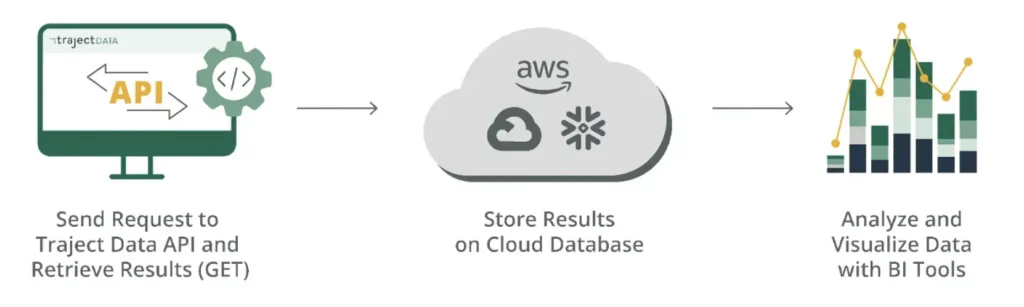
How it works: 

APIs are designed for automated data retrieval and to handle any spikes in demand, ensuring that your data delivery is always seamless and uninterrupted. This means you can access all the data you need, whenever you need it, without having to worry about scalability issues. 

Get Started with a Search or eCommerce API Today

In today’s fast-paced world, where trends and consumer behavior can change in a matter of hours, timely data is essential. Obtaining data directly from an API ensures that you have the most accurate and up-to-date information available — at a price your organization can afford.

APIs are a powerful tool for marketers. By leveraging them for data and insights, you can gain a competitive advantage by accessing the most current and reliable information available, allowing your organization to make smarter, data-driven decisions that drive growth and success. 

With APIs, you can leverage data insights to optimize your campaigns, increase conversions, and stay ahead of the competition. But not all APIs are created equal. Traject Data offers the largest suite of search and eCommerce APIs available. With our APIs, you get: 

  • A scalable flexible pricing model so you can purchase as little or as much data as you need, when you need it
  • Raw, robust, real-time data at the highest volume and granular enough to answer even your most specific questions 
  • Data in a variety of formats so that you can integrate it with any platform you choose and customize your analysis for unique insights

Explore our APIs to get more data, for less.

What Are APIs? Definition & Examples — for Marketers

APIs have become a buzzword in the world of technology and business. They are the backbone of modern software development, powering everything from mobile apps to cloud computing. As a marketer, you may have heard of them, but what are APIs? And how can they benefit your organization?

What are APIs? 

Application Programming Interfaces (APIs) can be technical and complicated. Some people have misconceptions about what they are and how they work. For example, you may think that an API is the same thing as a website or mobile app, or that they are only used by large technology companies. But that’s not the case. APIs are everywhere.

APIs can be confusing for a variety of reasons. They don’t often come with much context, are constantly changing to keep up with technology, and integrating them usually involves some coding. According to MuleSoft, only 56% of organizations have a mature API strategy that enables non-technical people to integrate data sources. As a result, we’re here to provide a clear definition, education, and resources on APIs so you can understand and use them to drive growth in your organization. 

In layman’s terms, APIs allow different software programs to communicate. By exchanging data, APIs can: 

  1. Create new software applications
  2. Add functionality to an existing application
  3. Integrate different software systems

They’re just a faster way to access data and build functionality by leveraging another software component or service. 

Categories of APIs

  • Public: Public APIs are open-source, meaning anyone can access and use them and use them for free. There are tons of examples of public APIs that provide data on the weather to sports to just about anything else. 
  • Partner: Partner or third-party APIs require specific rights or payment to access. Either you are doing business with an organization that provides you with access or you pay for access — such as the case with APIs as a product. Examples of partner APIs include PayPal or those you use to integrate your CRM with other tools. 
  • Private: Private or internal APIs are the ones built by your internal development team for your unique use case or needs. 

There are other ways to segment APIs, but this is the broadest categorization. The most common type of APIs within these categories are Web or REST APIs. They use HTTP requests to retrieve or manipulate data and typically return data in a standard format such as JSON or XML. 

Examples of APIs In Marketing

APIs are traditionally used by developers to build and integrate software applications or automate processes. If they’re leveraged properly, they enable organizations to create new products and services more quickly and efficiently. This is a marketer’s dream. This means you can better optimize your marketing efforts, and improve customer engagement and the overall customer experience. 

Some of the most common API uses in marketing include: 

  • Social media management: Many social media management tools utilize APIs from platforms like Facebook, Twitter, and Instagram to gather data on audience engagement, track campaign performance, and analyze competitor activity. Or, another way they’re used — apps, where you edit photos, use an API that integrates with social media platforms to automatically post your edited photos.  
  • eCommerce: APIs are widely used in the eCommerce industry to gather product data, track inventory levels, and process payments. Retailers can also use APIs to integrate their eCommerce platforms with third-party services like shipping and logistics providers.
  • Customer Relationship Management (CRM): APIs are an essential tool for CRM systems, allowing marketers to gather and manage customer data across multiple channels. This data can be used to create targeted marketing campaigns and improve customer retention.
  • Email marketing: APIs are used in email marketing tools to gather data on email opens, clicks, and conversions. This data can be used to optimize email campaigns and improve ROI.
  • Search Engine Optimization (SEO): Web APIs are responsible for the data you get from SaaS platforms like SEMrush and Moz. You can use these kinds of APIs to get real-time keyword results, track rankings, and much more. 
  • Advertising: APIs are used in advertising platforms to gather data on ad performance and optimize campaigns in real time. This helps marketers to maximize their ad spend and reach their target audience more effectively.

Every time you’re adding another connected app to your integrations in Hubspot, you’re using an API! But there are other ways to use APIs to innovate and add value for your customers. For example, a travel company can use APIs to create an app that provides real-time information about flights, hotels, and tourist attractions. Or a marketing agency can use APIs to get data on their clients’ products and develop comprehensive reporting and dashboards they can sell as part of their services.

As you can see, the use cases for APIs and marketing are limitless and the benefits are significant. 

Ready to See What Traject Data Can Help You Do?


We’re your premier partner in web scraping for eCommerce and SERP data. Get started with one of our APIs for free and see the data possibilities that you can start to collect.

Benefits of APIs to Marketers

APIs provide many benefits to marketers, they: 

  • Enable innovation: APIs provide a powerful mechanism for creating new products and services by allowing developers to leverage functionality and data provided by other systems. 
  • Improve your efficiency: APIs can streamline business processes by enabling different software systems to exchange data and automate tasks. 
  • Enhance the customer experience: APIs can enable organizations to create personalized and engaging customer experiences by leveraging data from multiple sources. 
  • Increase your revenue: APIs help organizations create new revenue streams by monetizing data and functionality provided by their systems. 

These benefits are impactful, but you don’t have to develop a product or application to use data from an API. APIs can provide you with valuable insights into your consumers, competitors, and products. By using APIs to collect and analyze data from various sources, you can gain a deeper understanding of your target audience and create more effective marketing campaigns. 

Using APIs to Identify Insights 

Primarily product and software development roles work with APIs because they can be complex and require special skills and expertise to implement and integrate them. But in reality, they have a much greater application. Marketers who have the right knowledge and resources can use APIs to get more data, for less. When you take this approach, you increase your chances of identifying unique insights — while saving your organization money. 

Quit Building Your Own APIs: Leverage API Products

Building and maintaining your own API requires a lot of time and expertise. Unless you have a very specific use case in which you need special features and functionality, chances are you can find an already available API to meet your needs — thanks to the growth of APIs as a product. The prevalence of organizations creating an API as a product or just API products has grown significantly. 

What are API Products? 

To define API as a product, it’s best to start with the three categories of APIs: 

  1. Public API: Public APIs are open-sourced, meaning anyone can access and use them. Usually, they’re built by individuals and provided for free. There are tons of examples of public APIs that provide data on the weather to sports to just about anything else. 
  2. Partner API: Partner or third-party APIs require specific rights or payment to access. Either you are doing business with an organization that provides you with access or you pay for access — such as the case with APIs as a product. Examples of partner APIs include PayPal or those you use to integrate your CRM with other tools. 
  3. Private API: Private or internal APIs are the ones built by your internal development team for your unique use case or needs. 

The number of public APIs has grown exponentially in the past few years, some estimate more than 200 million and counting. But because public APIs are free, they may not be actively maintained and thus suffer from performance issues and a lack of reliability. Further, they may not have important security measures in place to protect your data. 

Our business, like others, has seen the potential in providing APIs as a product to alleviate the burden on organizations of having to build their own and avoid the risks of using a public API. API as a product is the monetization of partner APIs for business purposes. It’s treating an API like a product by actively updating, maintaining, and marketing it. 

Ready to See What Traject Data Can Help You Do?


We’re your premier partner in web scraping for eCommerce and SERP data. Get started with one of our APIs for free and see the data possibilities that you can start to collect.

Benefits of Using API Products

Google has observed that teams that use API products rather than build individual APIs for project purposes are more likely to realize the potential value of APIs as business accelerators and maximize productivity.

Just some of the benefits your organization can get using an API product instead of building your own include: 

  • Time savings: Using an API product saves time by allowing your in-house developers to reuse resources, rather than building everything from scratch. They can focus on the core functionality of your application or service instead of working on maintaining parsers and proxy networks.
  • Scalability: Product APIs also provide access to large datasets that would be difficult, if not impossible, to collect on your own. This data can include anything from SERP results to product prices to reviews and more. And since the API is built as a product, it’s usually able to withstand large volumes of requests. 
  • Easy integration: Since product APIs are being sold as a product, they have to be able to integrate with a variety of data ecosystems. This can be highly beneficial if you’re working with multiple data environments. 
  • Better user experience: Product APIs can help provide a better user experience by allowing developers to spend less time on the maintenance of an API and more time on creating additional features and content in your applications – which makes your product more valuable and engaging to users. 

APIs are how data — arguably the most valuable currency for businesses outside actual money — is transferred. So it’s no surprise that 83% of organizations consider APIs a critical part of their business strategy. But to use them only as an integration tool or project-by-project is short-sighted. 

We strongly feel APIs are a strategic asset and aim to provide companies with all the API products they need over the long term — so they can focus on doing what they do best while we worry about the maintenance of the API. Explore all our APIs or learn more about evaluating and selecting the right API provider for your needs. 

Traject Data is Your Premier Partner in Web Scraping


Join thousands of satisfied users worldwide who trust Traject Data for all their eCommerce and SERP data needs. Whether you are a small business or a global enterprise, our entire team is committed to helping you achieve your goals and stay ahead in today's dynamic digital landscape. Unlock your organization's full potential with Traject Data. Get started today.

Get started today