Skip to content

How to Keep Your Omnichannel Ecommerce Data Consistent Across Every Platform With a Web Scraping API

The future of ecommerce is omnichannel, and a web scraper API for omnichannel ecommerce is essential for staying competitive. While multichannel selling expands your reach across multiple platforms, omnichannel ecommerce goes a step further by creating a seamless shopping experience across all touchpoints. This approach enhances brand consistency, improves customer engagement, and reduces risk. In this article, we’ll explore the biggest challenges of omnichannel ecommerce and how a web scraper API can help you monitor and optimize your strategy effectively.

Multichannel vs. Omnichannel Ecommerce: What’s the Difference? 

Multichannel – The goal of multichannel e-commerce is to maximize reach by being present on as many sales channels as possible—Amazon, Walmart, social media, websites, physical stores, and more. However, these channels often operate independently, leading to inconsistencies in pricing, inventory, and messaging.

Omnichannel – Retailers that use an omnichannel strategy don’t just sell on multiple platforms—they ensure a consistent, unified experience across them all. Messaging, branding, and pricing are harmonized, so customers receive the same experience whether they shop online, in-store, or on a marketplace like Amazon. The goal is to provide seamless transitions between channels, fostering trust and customer loyalty.

Still not sure if omnichannel is worth the investment? Consider these compelling statistics:

  • Omnichannel retailers retain 90% more customers.
  • Companies with omnichannel customer engagement see a 179% increase in sales revenue on average. 
  • Omnichannel shoppers generate 30% higher lifetime value, making them more profitable long-term.
  • Retailers using three or more channels see a 250% boost in consumer engagement. 
  • 90% of consumers expect a seamless brand experience across all channels—consistency matters more than ever.

The Biggest Challenges of Omnichannel Ecommerce

While omnichannel ecommerce offers a superior customer experience, it comes with significant challenges. Businesses must maintain consistency across platforms to avoid damaging their brand and losing customer trust.

1. Pricing and Messaging Consistency

Customers expect uniform pricing and messaging regardless of where they shop. However, price fluctuations, promotional inconsistencies, and mismatched product descriptions can create confusion and harm credibility.

2. Brand Image & Customer Experience

A strong, recognizable brand is key to customer loyalty. When branding varies across platforms, it creates a disjointed shopping experience that can weaken customer trust and engagement.

3. Data Visibility & Channel Conflict

Many businesses struggle to access real-time insights on sales, inventory, and customer behavior across multiple channels. When different departments prioritize their own sales strategies over an integrated approach, it can lead to conflicts that hurt the overall business.

4. Inventory and Order Management

Keeping stock levels synchronized across all platforms is crucial to avoid overselling or stockouts. Without accurate real-time inventory updates, businesses risk losing sales and disappointing customers.

How a Web Scraper API Can Solve Your Omnichannel Challenges

A web scraper API is an essential tool for maintaining consistency in omnichannel e-commerce, and improving customer experience. Here’s how it helps:

Real-time Data Monitoring – Ensures businesses always have up-to-date information on pricing, inventory, and competitor trends.
Automated Data Collection – Reduces manual effort and increases efficiency in tracking multiple sales channels.
Competitor Benchmarking – Helps businesses stay competitive by tracking competitor pricing and product availability.
Brand Compliance Monitoring – Ensures accurate product descriptions, pricing, and messaging across all platforms.
Review Monitoring – Track customer feedback across multiple channels to ensure customer satisfaction and address issues proactively.

Future-Proof Your Omnichannel Strategy with Traject Data

To succeed in omnichannel ecommerce, businesses need the right tools to collect and analyze data seamlessly. That’s where Traject Data comes in.

  • Wide Coverage Across Channels – Monitor pricing from Amazon, Walmart, Google, Target, Home Depot and Ebay.
  • Reliable Infrastructure – Get real-time data with minimal latency and downtime.
  • Seamless Integrations – Schedule automated data pushes to your preferred destination.
  • Scalability – Handle tens of millions of requests daily as your business grows.
  • Comprehensive Documentation & Support – Get expert guidance and fast issue resolution.
  • Flexible Pricing – Scale costs based on your needs with a free trial before committing.
  • Clean, Structured Data – We handle data parsing, so you get accurate results without extra processing.

Ready to take your omnichannel data monitoring to the next level? Try Traject Data for free and ensure consistency across every platform.

Ready to See What Traject Data Can Help You Do?


We’re your premier partner in web scraping for SERP data. Get started with one of our APIs for free and see the data possibilities that you can start to collect.
Harness the Power of APIs to Optimize Your Pricing Strategy

Digital technology has transformed consumer purchasing power. We can buy anything, anywhere, anytime, and the market is flooded with competition. As of 2025, there are approximately 30.7 million e-commerce stores worldwide. In the crazy world of ecommerce, your pricing strategy can make or break your business.

Companies that implement a structured pricing strategy can see a 40% increase in revenue year-over-year. But how do you implement an effective pricing strategy? A successful pricing strategy must be data-driven. Web scraping APIs for price tracking and competitive pricing provide real-time insights to help businesses make data-driven decisions and stay ahead of the competition.

The Role of Web Scraping APIs in Pricing Strategy

The beauty of online retail means that adjusting your prices based on market conditions is easy. The days of brick-and-mortar fixed pricing are gone. One in five ecommerce businesses now use dynamic pricing, automatically adjusting prices based on demand and inventory. Amazon, in particular, is known for its sophisticated dynamic pricing algorithms which update prices every few minutes based on demand, stock levels, and competitor pricing. Walmart is close behind, changing prices daily

The ability to track and analyze competitor pricing trends across multiple channels gives businesses an advantage. However, dynamic pricing makes it nearly impossible to manually stay on top of industry pricing trends. This is where price monitoring scraper APIs come in—they automate pricing intelligence, allowing businesses to track prices in real-time.

Major E-Commerce Platforms for Price Scraping

E-commerce giants like Amazon and Walmart dominate the online marketplace and set industry-wide pricing standards. Extracting pricing data from these platforms provides valuable insights into competitive pricing trends. Monitoring these marketplaces helps businesses react quickly to pricing shifts and implement strategic adjustments to stay ahead. 

Challenges in Price Scraping

While price scraping offers undeniable benefits, it also comes with challenges. Amazon and Walmart use sophisticated anti-scraping measures, including:

  • Bot detection
  • Rate limiting
  • IP blocking
  • CAPTCHAs

This results in frequent outages for homegrown and popular web scraping tools. The best price monitoring API for e-commerce must include advanced technology to handle frequent data updates, maintain accuracy, and avoid detection. 

Why Your Business Needs a Pricing API

A pricing API improves reliability and reduces downtime, ensuring uninterrupted access to real-time pricing data. Unlike traditional scraping methods, it’s faster, more efficient, and requires minimal maintenance.

A robust price monitoring API includes:

  • Built-in proxy management and anti-scraping defenses to bypass bot detection.
  • Automated updates that adapt to website changes without breaking.
  • Faster insights than manual scraping, keeping you ahead of competitors.

Use Cases for a Pricing Monitoring API

  • Competitive Pricing Analysis – Compare competitor pricing and adjust your strategy accordingly.
  • Identify Market Trends – Understand shifts in consumer demand and pricing fluctuations.
  • Price Matching Made Easy – Match or beat competitor prices to attract more customers.
  • Optimized Promotions – Plan strategic discounts using real-time pricing data.
  • Validate Supplier & Distributor Contracts – Ensure pricing agreements are being upheld across all sales channels.

Introducing Traject Data’s New Pricing Solution

At Traject Data, we know how important real-time pricing data is to your strategy. That’s why we’re excited to introduce our latest feature:

🚀 Amazon List Price Data 🚀

This powerful tool is designed to supercharge your pricing strategy by providing seamless access to real-time list prices.

Key Benefits of Traject Data’s APIs

  • Wide Coverage –Monitor pricing from Amazon, Walmart, Google, Target, Home Depot and Ebay.
  • Reliable Infrastructure – Get real-time data with minimal latency and downtime.
  • Seamless Integrations – Schedule automated data pushes to your preferred destination.
  • Scalability – Handle tens of millions of requests daily as your business grows.
  • Comprehensive Documentation & Support – Get expert guidance and fast issue resolution.
  • Flexible Pricing – Scale costs based on your needs with a free trial before committing.
  • Clean, Structured Data – We handle data parsing, so you get accurate results without extra processing.

Ready to Optimize Your Pricing Strategy?

The best way to automate price monitoring with an API is to leverage a trusted pricing intelligence solution like Traject Data. Contact us today to learn how our pricing monitoring APIs can help you gain a competitive edge!

Ready to See What Traject Data Can Help You Do?


We’re your premier partner in web scraping for SERP data. Get started with one of our APIs for free and see the data possibilities that you can start to collect.
Top 5 Amazon Scraper APIs

Amazon dominates the online retail space, holding 37.6% of the U.S. e-commerce market as of 2025—far surpassing competitors like Walmart. With over 310 million users worldwide and 353 million products available, its reach is unmatched. A staggering 89% of consumers prefer Amazon over other online retailers, and beyond e-commerce, Amazon commands 10.4% of the overall U.S. retail market, solidifying its influence across the industry. For businesses looking to stay competitive, an Amazon scraper API is an essential tool for gathering real-time product data, monitoring pricing, and analyzing market trends. In this article, we’ll explore the best Amazon scraper APIs to help you make data-driven decisions.

Benefits of Using Amazon Scraper APIs

Amazon’s pricing strategies and vast data repository profoundly shape the retail market, influencing consumer expectations and pushing competitors to adapt—a phenomenon often referred to as the “Amazon Effect.” This dominance makes publicly available data from Amazon’s site incredibly valuable for businesses seeking to optimize their strategies. However, writing and maintaining your own scraping scripts to collect this data is a labor-intensive task. When scraping data from Amazon, you face a list of challenges:

  • Dynamic page structure: Frequent website updates can break scrapers relying on specific HTML elements. Additionally, Amazon uses A/B testing to evaluate layouts and features.
  • CAPTCHA and anti-scraping mechanisms: Automated scraping attempts are often blocked by CAPTCHAs or other anti-bot techniques.
  • Rate limiting: Amazon may throttle requests, slowing down data extraction if not managed properly.
  • Legal considerations: While scraping public product data is generally allowed, understanding Amazon’s terms of service is essential to avoid compliance issues.
  • Data cleaning and validation: Scraped data may require extensive processing to remove irrelevant information and ensure accuracy.
  • Scalability issues: Extracting large data volumes can become computationally expensive without efficient techniques or cloud-based solutions.
  • And the list is constantly evolving as Amazon develops new ways to combat scraping scripts.

Using a web scraping API tailored for Amazon’s complex structure simplifies these challenges, offering cost-effective, scalable solutions.

Key Criteria for Choosing an Amazon Scraper API

Not all scrapers are created equal. When selecting an Amazon data provider, consider these factors:

  • Reliability: Ensure the API delivers real-time data with minimal latency and downtime.
  • Integrations: Look for seamless compatibility with existing tools or analytics platforms, including batch automation and delivery options.
  • Documentation and Support: Comprehensive documentation reduces the learning curve, while responsive customer support ensures prompt issue resolution.
  • Scalability and Speed: Choose a provider capable of handling large data requests without performance drops.
  • Compliance: Partner with vendors who adhere to Amazon’s terms of service. 
  • Pricing. Flexible, scalable pricing is also key, allowing you to adjust costs based on your current needs as your business grows. Before committing to a contract, leverage a free trial to explore its capabilities and assess whether it’s suitable for your needs.
  • Data cleaning and parsing. Some APIs return data in raw, unstructured formats that require additional parsing to remove extraneous information, which can slow down analysis. Advanced APIs streamline this by automating the parsing process, providing ready-to-analyze data from the start.

Top 5 Amazon Scraper APIs for 2025

1. Traject Data Rainforest API

  • Key Features: Pre-configured for e-commerce, real-time data retrieval.
  • Best For: Retailers needing actionable, real-time e-commerce data. Seamlessly integrates with analytics and reporting tools.
  • Trial Availability: Free trial with a detailed demo available.

2. Oxylabs 

  • Key Features: High-performance data extraction, structured JSON output, geo-targeting.
  • Best For: Proxy management.
  • Trial Availability: 7-day free trial with 5,000 requests.

3. Bright Data 

  • Key Features: Rapid extraction of product details, prices, reviews, and seller information.
  • Best For: Fast, large-scale data retrieval.
  • Trial Availability: No free trial.

4. ScraperAPI

  • Key Features: Scalable, anti-bot measures, proxy management.
  • Best For: Market research, trend monitoring, and competitor analysis.
  • Trial Availability: Limited free plan available.

5. DataForSEO

  • Key Features: Reliable e-commerce data retrieval, customizable API options.
  • Best For: Businesses seeking SEO insights alongside Amazon data.
  • Trial Availability: Free trial available with limited requests.

Amazon Data Collection APIs Compared

Traject Data Rainforest API Oxylabs Bright Data ScraperAPI DataForSEO
Key Features Real-time, pre-configured for e-commerce High-performance, geo-targeting Rapid extraction, structured output Scalable, anti-bot measures Reliable, customizable e-commerce data retrieval
Supported Locations Global Over 200 195 Global Global
Output Formats JSON, CSV JSON JSON, CSV, Excel JSON JSON, CSV, Excel
Free Trial Free trial available 7-day free trial No free trial Limited free plan available Free trial available
Best For Retailers needing real-time, actionable data Proxy Management Market research Trend monitoring SEO insights and Amazon data
Ease of Use User-friendly, Easy to integrate Requires technical expertise Requires technical expertise User-friendly User-friendly
Integrations Seamless with analytics tools Compatible with Python, Java Wide language support RESTful API support SEO and e-commerce platforms
Documentation & Support Detailed docs, dedicated support Comprehensive, 24/7 support Detailed guides, live support Well-documented, chat support Well-documented, dedicated support
Data Parsing Fully structured, real-time updates Structured JSON output Extracts structured data Parses raw HTML/JSON data Structured output with SEO insights

Get Real-Time Amazon Data with Traject Data

Modern Amazon Data Collection APIs eliminate the complexities of manual scraping, offering streamlined, organized data collection tailored to your business needs. Among them, Traject Data’s Rainforest API stands out with its pre-configured e-commerce focus, real-time updates, and ease of integration, making it a top choice for retailers and analysts alike. Click here to get started.

Ready to See What Traject Data Can Help You Do?


We’re your premier partner in web scraping for SERP data. Get started with one of our APIs for free and see the data possibilities that you can start to collect.
How to Scrape Walmart.com

Walmart is the second-largest online retailer in the U.S., after Amazon. By 2025, Walmart’s online sales are projected to hit $3.4 billion. Together, Walmart and Amazon dominate the market so significantly that they effectively set the pricing trends for entire industries.

Walmart’s pricing strategies often send ripple effects across the retail landscape. Other retailers are frequently forced to match Walmart’s prices—often at the expense of their profit margins—or find creative ways to stand out. For anyone looking to stay ahead in the e-commerce game, keeping an eye on Walmart.com is essential.

Why Scrape Walmart? 

Walmart lists over 43 million products online, and this number is increasing each year. This publicly available data is a goldmine for businesses looking to refine their e-commerce strategies. Some of the top use cases for scraping Walmart include:

  • Competitive Pricing Analysis: By extracting pricing information, companies can compare their prices with Walmart’s, helping them stay competitive in the market.
  • Market Research: Scraping product trends, customer reviews, and sales data provides valuable insights into market demand and consumer preferences.
  • Inventory Management: Tracking stock levels and product availability allows businesses to optimize their inventory and reduce stockouts or overstocking.
  • Discount and Promotion Tracking: Automated scraping of coupon data and promotional offers help you stay on top of the latest deals. 
  • SEO and Content Creation: Analyzing Walmart’s product descriptions and keywords can inform SEO strategies and content creation for other e-commerce sites.

Why You Need an API to Scrape Walmart 

To effectively track products, pricing, and reviews at scale, you need an automated solution like a Scraper API. While some developers attempt to build and maintain their own scraping tools, this requires ongoing maintenance and monitoring. Affordable solutions like Traject Data offer a cost-effective and hassle-free alternative. With Traject Data, you’ll get scalability, reliability, reduced maintenance, legal compliance, structured data, and support.

Getting Started with Traject Data’s Walmart Scraper API

Traject Data’s BlueCart API is an API to retrieve public-domain data from Walmart in real-time. You can use BlueCart API to retrieve products, reviews, search results, autocomplete results and category listings from Walmart.

BlueCart API returns clean, structured JSON or CSV results. You can achieve fine-grained control over your request using the request parameters.

Retrieving Search Results for Products on Walmart

Getting search result Walmart data with BlueCart API is as simple as making an HTTP GET request to the request endpoint. The only required parameters are api_key (sign up for free to get an API key) and type (which defines the type of Walmart data you’d like to retrieve). For example, to retrieve search results ( type=search ) for the search term highlighter pens , ordered by best selling products ( sort_by=best_seller ) the BlueCart API request would be:

https://api.bluecartapi.com/request?api_key=demo&type=search&search_term=highlighter+pens&sort_by=best_seller

The search results are shown within the search_results array. For full documentation on the search results response see the Search Results docs.

Getting Data for an Individual Product

Lets say we want to change our query to request a different type of data – information on a specific product, in this case the product with Item ID 27672251 on walmart.com . Here’s the BlueCart API request to achieve that:

https://api.bluecartapi.com/request?api_key=demo&type=product&item_id=27672251

Localizing Results to a Zipcode or Postal Code BlueCart API allows you to retrieve results as they would be seen by a user in a given zipcode or postal code by specifying the zipcode or postal code in the customer_zipcode request parameter.

For example, to request results as they would be seen by a user in US zipcode 77001 you should append the customer_zipcode=77001 request parameter.

For more documentation Traject Data’s Bluecart API visit our Help Center.

Explore Traject Data’s solutions today and see how they can help your business thrive in the digital age.

Ready to See What Traject Data Can Help You Do?


We’re your premier partner in web scraping for SERP data. Get started with one of our APIs for free and see the data possibilities that you can start to collect.
Data-Driven Brand Protection: Strategies to Safeguard Your Business

81% of consumers need to trust a brand to consider buying from it, but brand protection is becoming increasingly difficult in the digital age. A single negative article found online can cause a business to lose up to 22% of its customers. Approximately $2 trillion worth of counterfeit products are sold to consumers annually. With the massive size of the internet, brand protection and monitoring isn’t something that can be done manually. Businesses that want to protect their brand image online need data and tools. The most common tool is a brand monitoring scraper API, also known as a brand monitoring data collection API.

What is Brand Monitoring?

Brand monitoring is all about keeping your business’s reputation and identity safe from harm. It means stopping things like counterfeit products, fake websites, and misuse of your logos or trademarks. It’s also about protecting your customers from scams or misinformation that could damage their trust in your brand. In today’s fast-paced digital world, threats can pop up anywhere—on social media, review sites, or forums—so staying on top of them is key. By actively monitoring and addressing these risks, you can make sure your brand stays strong and customers know they can rely on you.

The Role of Scraper APIs in Brand Monitoring

Brand Monitoring Data Collection APIs, or web scraping APIs, are like your brand’s eyes and ears on the internet. They help you keep track of what’s being said about your business by gathering data from customer reviews, social media, pricing information, and search engine results pages (SERPs).

  • Keeping Tabs on Customer Sentiment. APIs can pull reviews from platforms like Amazon, Google, Bing, and Walmart, making it easier to spot trends in customer satisfaction and pinpoint areas where improvements are needed.
  • Spotting Counterfeits. They’re also great at scanning e-commerce sites for unauthorized sellers or counterfeit versions of your products, so you can tackle intellectual property violations head-on.
  • Tracking Brand Mentions. By monitoring mentions of your brand across websites, forums, and social media, these APIs let you stay on top of conversations. This way, you can address misinformation or negative press before it spirals out of control.
  • Catching Fraudulent Activities. Whether it’s fake reviews or bot-generated comments, Data Collection APIs help you detect and deal with anything that might harm your brand’s reputation. They ensure your interactions with customers stay authentic and trustworthy.
  • Omni-channel Consistency. Customers expect a seamless experience across all platforms—whether they’re shopping on Amazon, Walmart, browsing your website, or checking prices in-store. Without consistency in pricing, product descriptions, and availability, your brand can lose credibility.

In short, these APIs are a powerful tool for protecting your brand in today’s digital landscape.

Benefits of Using Scraper APIs for Brand Monitoring and Protection

Manually keeping track of brand mentions is nearly impossible, and creating your own scripts can be expensive and time-consuming to maintain. Thankfully, cost-effective solutions are available that automate brand monitoring for you. Here are some benefits of using a third-party data collection API:

  • Real-time insights for quick decision-making. With data flowing in continuously, you can respond to challenges or opportunities as they arise.
  • Scalability to monitor multiple platforms simultaneously. Whether you’re tracking hundreds of e-commerce listings or monitoring global social media trends, these APIs can handle it.
  • Cost-effectiveness compared to manual monitoring or traditional research. Automation significantly reduces overhead and saves time.
  • Improved accuracy through automation and data analysis. Eliminate human error and ensure precise, actionable insights.

Best Practices for Using Brand Monitoring Data Collection APIs

To get the most out of a Brand Monitoring API, follow these best practices:

  • Adhere to ethical web scraping guidelines. Always respect a site’s terms of service and avoid disruptive practices.
  • Ensure compliance with data privacy laws. Regulations like GDPR and CCPA require careful handling of personal data.
  • Partner with reliable scraper API providers. Working with a trusted provider like Traject Data ensures you’re getting accurate and secure data. 

Traject Data’s Brand Monitoring API Solution

Traject Data’s SerpWOW API is designed to help businesses safeguard their reputation and protect their market share. Its features include:

  • Seamless integration with your existing systems.
  • Scalability to handle large-scale monitoring across multiple channels.
  • Robust support to ensure you’re maximizing the value of your data collection efforts.

In today’s digital-first world, brand protection is more critical than ever. Tools like data collection APIs make it possible to monitor and respond to threats in real-time, ensuring your business stays ahead of the competition and earns the trust of your customers. Ready to protect your brand? Explore Traject Data’s solutions today and see how they can help your business thrive in the digital age.

Ready to See What Traject Data Can Help You Do?


We’re your premier partner in web scraping for SERP data. Get started with one of our APIs for free and see the data possibilities that you can start to collect.

Celebrating 2024 With You

This year was busy with feature releases and speed optimization – complete data delivered faster than ever to support your growth goals and help you bring new or improved products and services to market. 

We cut data retrieval response time by 50% in the past year, with rearchitected infrastructure and parsing improvements ensuring access to fast, clean, and reliable SERP and eCommerce data.

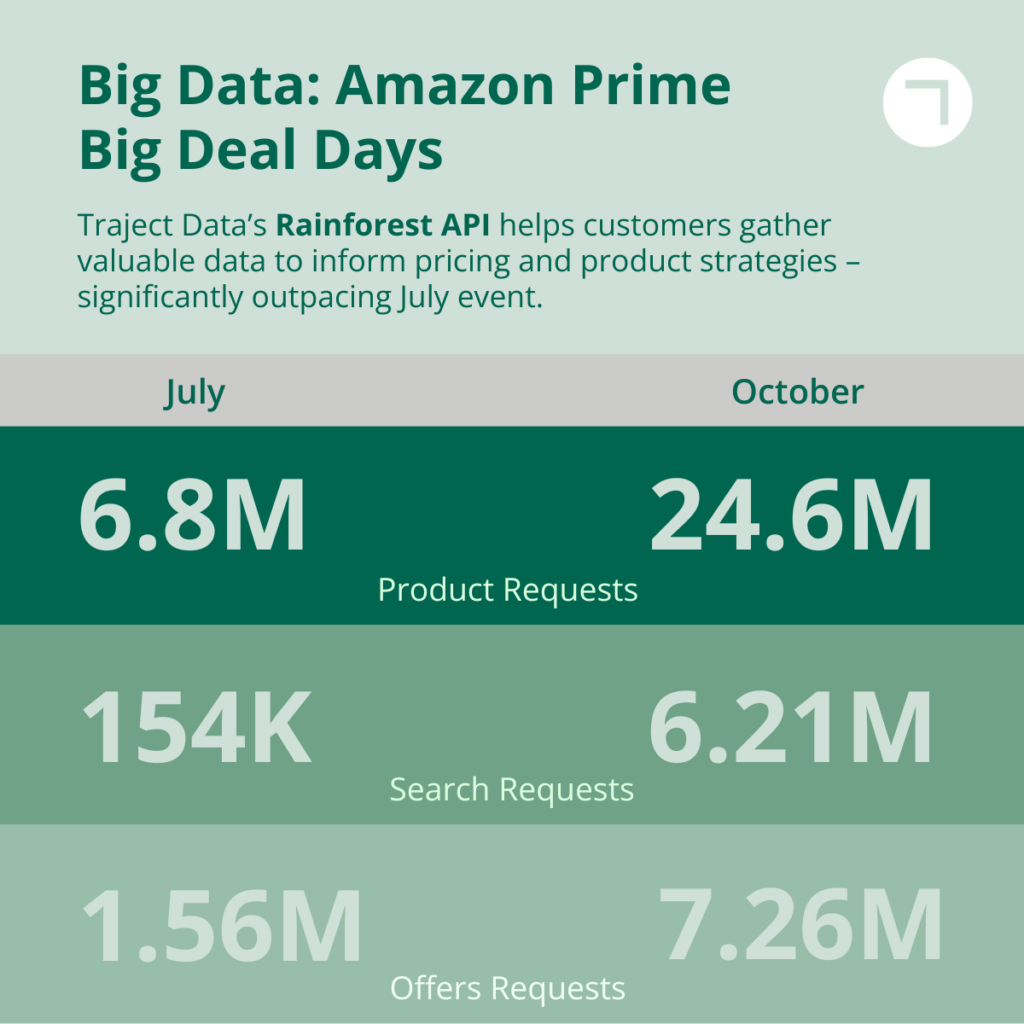
During another record-breaking Prime Day, our engineering team worked around the clock to adjust our data collection methods so Rainforest API customers could capture essential data from Amazon. That was followed by an uneventful (read: no blocking issues) 😀 but sizable delivery of data during Prime Big Deal Days. Customers counted on us to get this valuable sales event data to inform their pricing and product strategies.

    Beyond the performance gains, we released nearly 50 product updates across our SERP and eCommerce APIs – many of which were informed by your input on features and functionality.

    Highlights of 2024’s releases

    🔍 Google Search – SERP APIs

    In the AI-powered world of search, the SEO landscape – and the SERP – is changing quickly. Brands now have to compete not just for Google ranking, but for visibility with an AI Overview. Our SERP API customers trust us to reliably capture AIO data as they make the shift to optimizing for generative search to keep their brands visible. 

    More of 2024’s in-demand SERP releases
    With our expanded Google coverage we deliver more of the latest data to inform your traditional SEO and ranking strategies. Monitor your ranking and visibility, check who’s ranking for your search terms and find new competitors.

    🛍️ Shopping Aids

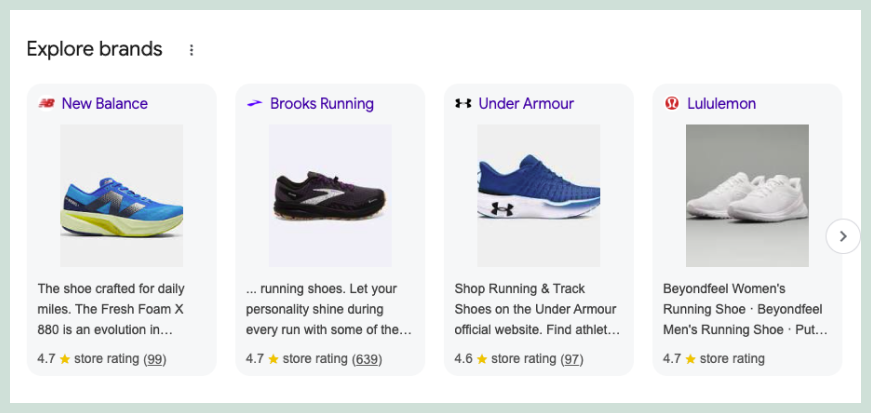
    Explore Brands
    Get the list of suggested brands appearing for your search queries. Check keyword strategy and competitor performance.

    Popular Products
    Which products show for your search term? Check this selection of items available for purchase to inform product detail page optimization that supports organic ranking.

    Buying Guide
    See the various sources of product detail insights and editorial content that Google serves for a product category query to understand which content provides an opportunity to appear.

    💡Learn & Discover

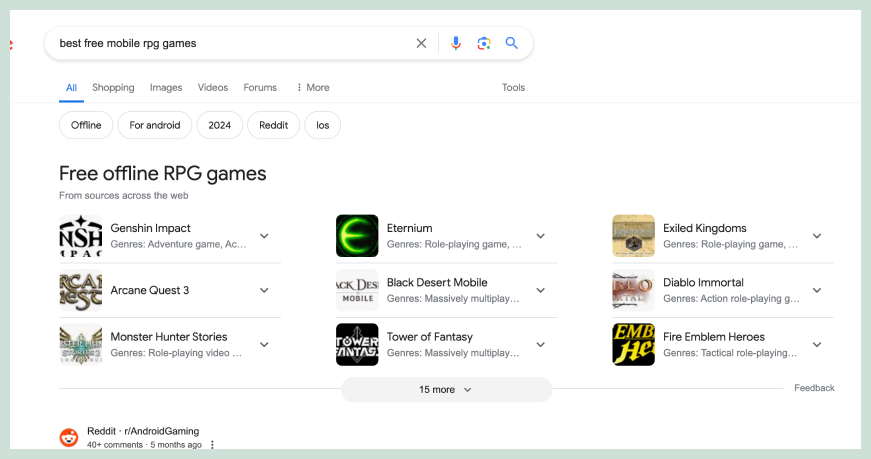
    From Sources Across the Web (Found on the Web)
    See who makes it into this snippet, often only outranked by a sponsored result, which gives users a collection of related summary content from multiple sources. Uncover articles and blog posts that cover topics related to your business so you can learn how to rank.

    Discussion & Forums
    Which forums and online discussions are served to help users research a topic? Get the links and see which content Google is selecting for its high quality i.e. knowledge sharing or troubleshooting.

    Questions & Answers
    Capture the list of sources for closely related questions and answers based on a search query. Find opportunities to improve your Q&A pages and earn votes.

    Courses
    Want to see which platforms make it into the carousel Google serves to help users discover courses? Get the course results and details.

    ✈️ Travel & Entertainment

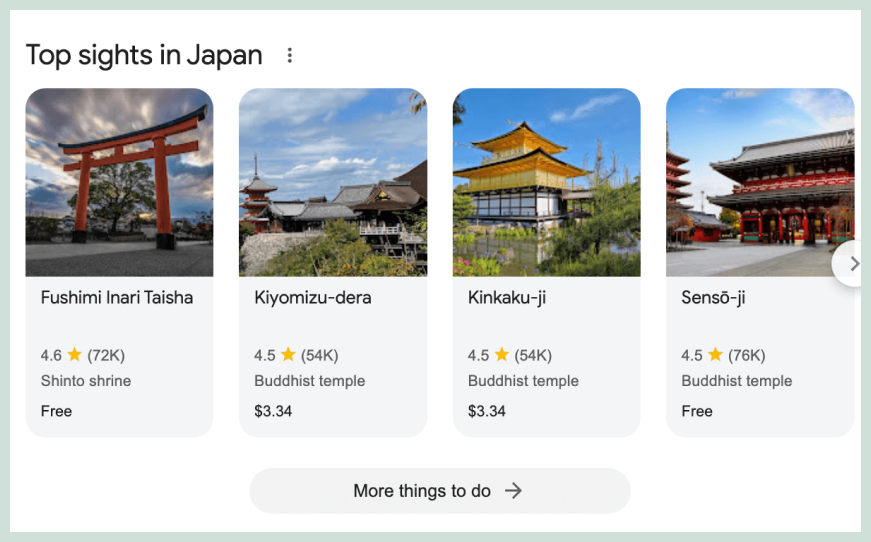
    Top Sights/Things to Do
    See if your business is showing up for queries mentioning your business location, and track other businesses in your area that are landing a spot in these top 3-4 attractions.

    Tickets & Tours (Sponsored Experiences)
    Track competitors and spot new opportunities to stand out and drive revenue with this ad format.

    View all releases by product: SerpWow | Scale SERP | VALUE SERP

    🛒 Amazon – Rainforest API, ASIN Data API

    With expanded data from amazon product and search results pages, our customers are equipped to tackle competitor and product research, and build a strategy for staying competitive both on and off Amazon.

    📚Books: Gift Guide Badges
    Capture data for the books that earn the Teachers’ Pick, Children’s Book Tip, Editors’ Pick, and Goodreads Choice badges.

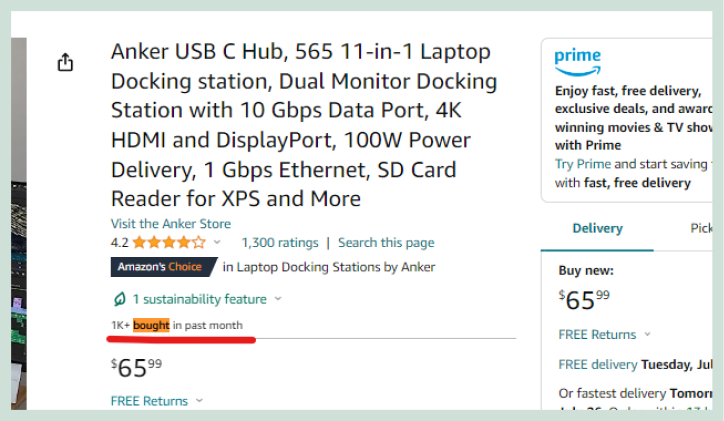
    Sales Velocity (Recent Sales)
    Are you looking to gauge demand for a product? One data point that can help is the sales velocity, or sales in a given time period, from an Amazon product page.

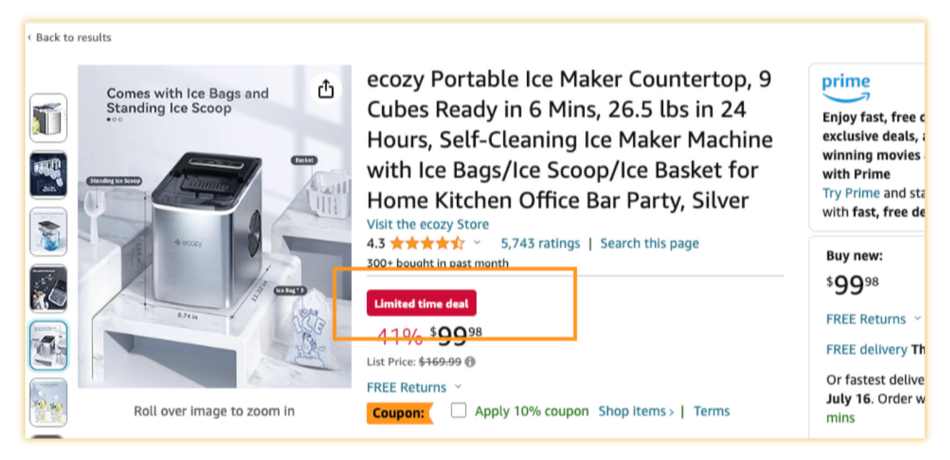
    Deal Badges
    Track types of deals on your target products during Prime Days and other promotional events so you can build effective strategies for future Amazon sales events.

    See more releases: Rainforest API | ASIN Data API


    News & Notes

    • 💡 Our CEO Rochelle Thielen shares tips to avoid costly mistakes linked to poor quality or inaccurate data
    • ✨ How Semify transformed their data operations – read our latest customer success story
    • 🎉 Celebrating our certification as a Great Place To Work® for 2024 — We’re grateful to our CEO Rochelle Thielen and our People Ops team for making Traject Data a place where we can all do our best work together!

    Thank you 

    As we get ready to head into 2025, we’re already excited to see what we can do together! 

    How to Use an Amazon Scraper API to Boost Your Search Rankings

    As of August 2024, there are over 9.7 million third-party sellers on Amazon, and the number keeps growing each year. A typical Amazon search returns dozens of pages of results, but most users rarely go beyond the first few pages. In fact, the majority of clicks happen on the first page. Here are some key statistics

    • 70% of Amazon customers never click past the first page of search results.
    • 35% of Amazon shoppers click on the first product featured on a search page.
    • 64% of clicks go to the first three items displayed in search results.
    • 81% of clicks go to brands on the first page of search results.

    With competition on Amazon heating up, the need for search ranking optimization is more important than ever. In this article, we’ll share some tips and how to leverage an Amazon data scraper API to improve your Amazon search engine results ranking.

    How Does Amazon SEO Work?

    Amazon’s product ranking algorithm, known as “A10” (which replaced the A9 algorithm in 2021), determines a product’s position in search results. Amazon updates the algorithm frequently, though it doesn’t disclose how often these updates occur. Rankings also fluctuate based on customer behavior. For example, as more buyers purchase an item, its ranking improves. During holiday seasons or specific events like the Super Bowl, product listings with relevant keywords for those occasions will rank higher. Sellers should expect their product rankings to change throughout the day, week, month, and year.

    Key factors that influence Amazon’s ranking algorithm include:

    • Relevance: How well the product listing matches a customer’s search query, including optimized keywords.
    • Sales history: Products with strong sales performance rank higher.
    • Amazon Best Sellers Rank (BSR): a metric that calculates a product’s sales rank compared to similar products on Amazon. Products with a higher rank, will get a boost in search results. 
    • Customer reviews: Quantity, quality, and recency of reviews matter.
    • Pricing: Competitive pricing is crucial, but the lowest price doesn’t guarantee the top spot.
    • Prime eligibility: Prime products are favored.
    • Geographic location: Rankings may vary depending on where the customer is located.

    How to Improve Your Amazon Search Results

    Obsessing over Amazon SEO is a must for every seller aiming for success. Here are some tips to climb the rankings:

    • Optimize your product listing: Use engaging descriptions, effective tagging, and include relevant keywords in your title and description. Think like your customers—what would they search for?
    • Promote your listing: Run sales events, offer coupons, or use Amazon Ads to drive traffic and boost sales. Higher sales leads to higher rankings, which leads to higher sales.
    • Use high-quality images: Clear, well-lit, professional images that showcase your product from multiple angles make a big difference.
    • Earn customer reviews: Encourage buyers to leave reviews. Recent reviews carry more weight in the ranking algorithm.
    • Become a Prime seller: Enroll in Amazon’s Fulfillment by Amazon (FBA) program to improve your chances of ranking higher.

    Leverage an Amazon Scraper API to Improve Your Amazon SEO

    Top Amazon sellers often rely on an Amazon scraper API to gather the data they need to stay competitive. Since rankings can change several times a day, manual monitoring just isn’t practical.

    Here’s how you can use a scraper API to boost your SEO:

    1. Monitor your rank: Track your page ranking and keep tabs on your competitors.
    2. Analyze keyword usage: Identify high-performing keywords used by competitors and strategically incorporate them into your product titles, descriptions, and backend keywords.
    3. Price optimization: Use data to adjust your pricing competitively while considering market demand and value proposition.
    4. Review analysis: Monitor your own product reviews to protect your reputation and scrape competitor reviews to identify pain points and areas for improvement in your product or listings.

    The Bottom Line for Amazon SEO

    Mastering Amazon search rankings isn’t just about understanding the A10 algorithm—it’s about leveraging every available tool to optimize your listings, pricing, reviews, and keywords. With millions of sellers competing for clicks, staying ahead requires more than effort; it demands data-driven insights collected through an industry-leading Amazon API.

    That’s where Traject Data’s Rainforest API comes in. With real-time monitoring of your rankings, competitor data analysis, review tracking, and keyword discovery, Rainforest API empowers you to make smart, strategic decisions that drive results.

    Forget manual monitoring and guesswork—let automation and precision take your Amazon SEO strategy to the next level.

    Ready to elevate your Amazon game? Try Traject Data’s Rainforest API today and unlock actionable insights to dominate the search results. Get started now!

    Ready to See What Traject Data Can Help You Do?


    We’re your premier partner in web scraping for eCommerce data. Get started with one of our APIs for free and see the data possibilities that you can start to collect.
    Maximize Your Amazon Sales with Amazon Scraper APIs: A Complete Guide

    Amazon is the uncontested leader in e-commerce, serving as the starting point for 56% of online shoppers. What many don’t realize is that the majority of products sold on Amazon come from independent sellers. However, not all sellers experience equal success. Only 19% of Amazon small business sellers achieve average monthly sales exceeding $10,000.

    What sets top-performing sellers apart? The answer lies in data—lots of it. This blog introduces how Amazon scraping can drive strategic business outcomes in today’s competitive e-commerce landscape.

    How Amazon Scraping Can Improve Your Business

    Leading Amazon resellers leverage web scraping tools to gain insights into pricing, product trends, and market opportunities. Scraping publicly available data—such as product titles, descriptions, prices, and reviews—is legal, provided it complies with Amazon’s terms of service.

    Regularly monitoring Amazon’s marketplace offers several key benefits:

    • Search Ranking Monitoring: Optimize product listings and monitor search rankings over time to stay visible as Amazon continuously updates its search algorithms.
    • Reviews Monitoring: Protect your brand by analyzing customer feedback for your products. Monitor the feedback for competitor products to identify opportunities to enhance your offerings.
    • Competitor Pricing: Track competitor prices to inform your own pricing strategies.
    • Product Comparison Data: Compare similar products across sellers to refine your market positioning.
    • Strategic Insights: Discover underserved customer needs and new market opportunities to guide business strategy.

    How to Start Amazon Web Scraping

    Amazon data scraping began as a manual task—copying and pasting data into spreadsheets. Over time, tools like Python scripts streamlined the process, allowing for automated data collection. However, maintaining a custom script comes with challenges:

    • Constant Maintenance: Amazon has over 40,000 software engineers, releasing software updates multiple times a day. This requires constant maintenance of scraping scripts.
    • Policy Compliance: Amazon often updates its policies and terms of service. Violators risk being blocked from the site. 
    • Data Parsing: Extracted data often requires additional scripts to clean and organize it for analysis.

    Fortunately, third-party Amazon scraping APIs now offer a more efficient and cost-effective solution.

    The Benefits of Using Amazon Scraper APIs

    Modern Amazon scraper APIs eliminate the complexities of manual scraping or custom-built scripts, offering streamlined data collection tailored to your business needs. The data is delivered organized and ready for analysis. 

    Traject Data’s Rainforest API is a leading solution for Amazon data scraping. Key benefits include:

    • Data Parsing: The API delivers clean, structured data, eliminating the need for time-consuming parsing.
    • Customizable Data Delivery: Tailor data collection and delivery to meet your specific business requirements.
    • Scalability and Cost-Effectiveness: Flexible pricing allows you to scale data usage as needed, with free options available for basic usage.
    • Robust Support and Documentation: Comprehensive guides and responsive support ensure seamless integration with your analytics tools.
    • Versatile Data Export: Export data in formats like JSON or CSV, or have it delivered directly to your systems.

    Conclusion

    Data-driven decisions are the foundation of success in the competitive world of e-commerce. Whether you need to monitor competitors, track search rankings, or analyze customer reviews, Amazon scraper APIs can provide the insights you need to thrive.

    Rainforest API simplifies the process, delivering accurate, actionable data at an affordable cost. Start transforming your e-commerce strategy today with tools that empower your business to succeed in the Amazon marketplace.

    Ready to See What Traject Data Can Help You Do?


    We’re your premier partner in web scraping for eCommerce data. Get started with one of our APIs for free and see the data possibilities that you can start to collect.

    Capture Reviews & Ratings Data at a Low Cost with an API

    In the past, consumers relied on word of mouth to make purchasing decisions. Today, “digital word-of-mouth” — online reviews and ratings — holds immense influence due to its reach and persistence. In fact, online reviews have become critical in shaping consumer opinions and driving sales.

    However, reviews are scattered across multiple platforms, frequently changing, and require active monitoring to capture insights in real time. This guide will explore how using a low-cost API can simplify review data collection, helping your business stay competitive by accessing essential insights at scale.

    Why Monitoring Reviews and Ratings Matters for Businesses

    To say that reviews matter is an understatement. 93% of consumers read reviews before making a purchase, and 97% say customer reviews influence their buying decisions. Negative reviews, in particular, carry a lot of weight — 94% of consumers say a bad review has convinced them to avoid a business.

    Even a small improvement in a business’s ratings can lead to measurable gains. A one-star increase, for example, can result in a 5-9% revenue boost.

    There are many applications and benefits to consistently monitoring review data:

    • Preserving Brand Image: Monitoring reviews allows businesses to quickly identify and respond to negative feedback, helping to protect their reputation. Timely responses to reviews show customers that a business is attentive and proactive.
    • Identifying Opportunities: Analyzing reviews helps businesses understand what customers love and what they don’t. By identifying unmet needs in the market, companies can adjust their offerings or develop new products to fill those gaps.
    • Competitive Intelligence: Tracking competitors’ reviews can reveal strengths and weaknesses, offering insights into market expectations and helping refine your competitive strategy.
    • Improving Product Descriptions: Customer feedback can highlight specific features or benefits to emphasize in product descriptions, aligning marketing with customer preferences.
    • Evaluating Performance Across Retailers: For businesses selling on multiple platforms, monitoring review data provides insights into product performance and helps maintain consistent brand messaging across different sites.
    • Adapting to Market Shifts: Regular monitoring enables businesses to identify and respond to market changes or shifts in consumer sentiment, helping to stay relevant and responsive.

    Challenges in Collecting Review Data at Scale

    In the past, collecting review data often meant manually copying and pasting reviews into spreadsheets — a time-consuming and error-prone process. While scraping tools offered a more automated approach, they required significant maintenance due to frequent website layout and structure changes. Thankfully, technology has advanced, and scalable, cost-effective APIs now make it possible to automate review monitoring in real time at low cost.

    However, there are still challenges in collecting review data at scale:

    • Platform Limitations: Some review platforms restrict or limit data scraping. An effective API solution must navigate these restrictions to ensure comprehensive data coverage without violating terms of service.
    • Data Quality and Consistency: Collecting data manually from multiple platforms can introduce inconsistencies, especially when formats vary. APIs that provide structured data help reduce errors and streamline analysis.
    • Managing High Volumes: As the number of reviews grows, managing large datasets becomes increasingly complex. APIs that support bulk data handling make it easier to process and analyze high volumes of data.

    How to Choose the Right Review Scraping Tool

    Selecting the right API for review monitoring involves evaluating several critical factors:

    1. Omni-Channel Coverage: Look for an API that covers major review sources like Google Maps, Google Shopping, Amazon, Walmart, and Target. Comprehensive coverage ensures you capture a wide range of customer feedback, and the best APIs also offer additional data like pricing and product details.
    2. Real-Time Data Access: Timely access to reviews is essential for businesses that want to respond quickly to customer feedback. Choose APIs that provide near-instantaneous updates, so you’re always aware of the latest customer sentiments. APIs that adapt to changing site structures and rules also help future-proof your review collection efforts.
    3. Data Parsing: Some APIs deliver data in raw formats that require additional parsing, which can slow down analysis. Look for APIs that streamline the parsing process, providing clean, structured data that’s ready for analysis from the start.
    4. Customizable Data Delivery: Many APIs offer options for customizing data delivery, such as adjusting intervals or filtering specific types of reviews. This flexibility can be invaluable for tailoring data collection to specific business needs.
    5. Cost and Scalability: Pricing should be flexible, allowing you to scale up or down based on data volume and usage. Opt for providers that offer tiered pricing, which can adapt to your business growth and budget constraints. Some providers even offer free options for basic usage.
    6. Support and Documentation: A well-documented API with reliable support reduces setup complexity and can help resolve issues faster. Comprehensive guides and active support channels are particularly valuable if you’re integrating the API with other analytics tools.

    Conclusion

    Collecting and analyzing online review data is essential for businesses to manage online reputation and stay competitive in today’s digital landscape. A cost-effective, scalable API solution enables you to streamline data collection, reduce manual effort, and focus on actionable insights that drive growth. Regularly monitoring reviews helps businesses protect their brand, refine products, and enhance customer service.

    Try Traject Data’s APIs to Stay on Top of Your Reviews and Ratings Online

    Stay ahead by making data-driven decisions. Traject Data offers affordable, scalable APIs tailored for online review monitoring, empowering you to collect and analyze reviews at scale. Learn More about Traject Data’s Review Monitoring Solutions

    Ready to See What Traject Data Can Help You Do?


    We’re your premier partner in web scraping for eCommerce and SERP data. Get started with one of our APIs for free and see the data possibilities that you can start to collect.
    Revving Up Your Analytics to Capture Your Holiday Share of Wallet Earlier

    We’re a few weeks away from Black Friday, but for many consumers the holiday season has already been here for a while, and retailers have started capturing their (un)fair share of wallet earlier. Holiday shoppers have taken advantage of big savings with record-breaking events like Amazon’s second Prime Big Deal Days and Walmart’s first Holiday Deals event in October. In fact, 48% of holiday shoppers began shopping in August, September or October.

    Still, 37% of holiday shoppers plan to do their shopping in November and will be looking to score big deals on Black Friday and Cyber Monday. To build their own effective pricing and product strategies, Amazon and Walmart sellers, and competitor marketplaces need to keep an eye on the strategies of successful brands, especially during major sales events like Black Friday and Cyber Monday.

    Product pricing in particular is one of the most complex aspects of the big ecommerce marketplaces. Pricing strategies need to consider all factors, some of which are applicable across retailers or marketplaces, i.e. retail holidays or shopping events. Then there are the factors that are unique to a marketplace like Amazon – extreme competition.

        Amazon sellers and similar marketplaces must continuously iterate on their pricing strategies by:

        • Capturing up-to-date pricing data for products in their categories of interest on a regular cadence so they can track product price changes over time i.e. peak and lowest prices
        • Constantly monitoring competitors, especially in categories with many sellers offering the same type of products
          • Track the types of offers and deals i.e. Prime exclusive and Black Friday, and discount amounts
          • Make price adjustments to stay competitive and therefore increase the chances of winning the Buy Box 

        Traject Data’s Rainforest API (Amazon) and BlueCart API (Walmart) provide a real-time deal and discount data feed to keep your analytics and tools fresh. Track ASINs/Product IDs at scale without worrying about maintaining web scrapers.

        • Effectively execute a dynamic pricing strategy with up-to-the-minute data
        • Learn how to optimize your assortment
        • Analyze competitor ad strategy

        Here are some examples of data points our customers rely on us for to equip their businesses for marketplace promotion analytics:

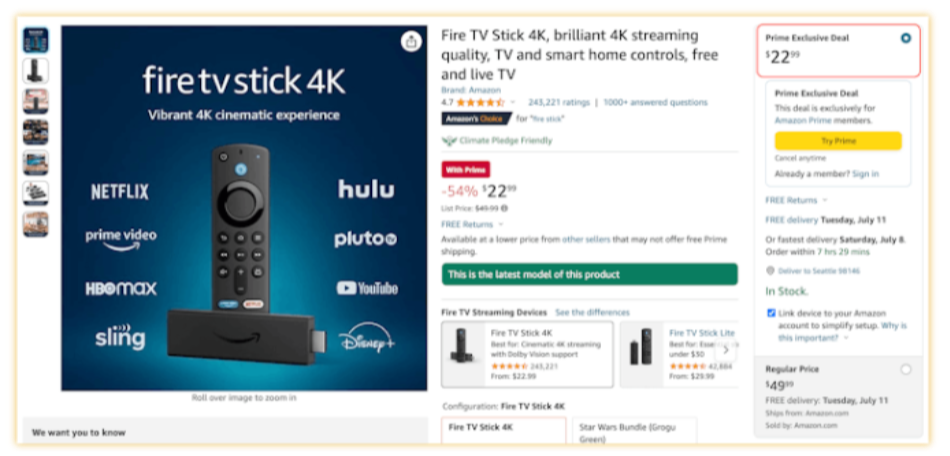
        Rainforest product results capture Prime Exclusive deals and deal badge

        Rainforest API returns results with is_prime_exclusive_deal to indicate whether a product is a Prime Exclusive Deal and with deal_badge to indicate that a deal badge is present and the text presented when request type=product. View docs.

        Rainforest search results return a deal object

        Rainforest API returns a deal object with a type=search request. The object returns three possible results: link, text and badge_text. View docs.

        Try Rainforest API free to capture Amazon data.

        Try BlueCart API free to capture Walmart data.

        Ready to See What Traject Data Can Help You Do?


        We’re your premier partner in web scraping for eCommerce data. Get started with one of our APIs for free and see the data possibilities that you can start to collect.
        Traject Data is Your Premier Partner in Web Scraping


        Join thousands of satisfied users worldwide who trust Traject Data for all their eCommerce and SERP data needs. Whether you are a small business or a global enterprise, our entire team is committed to helping you achieve your goals and stay ahead in today's dynamic digital landscape. Unlock your organization's full potential with Traject Data. Get started today.

        Get started today